National Women's Hall of Fame
The National Women’s Hall of Fame, an internationally recognized home of the women’s rights movement, has recently opened the Center for Great Women in Seneca Falls, NY and continues to make improvements on this historic site.
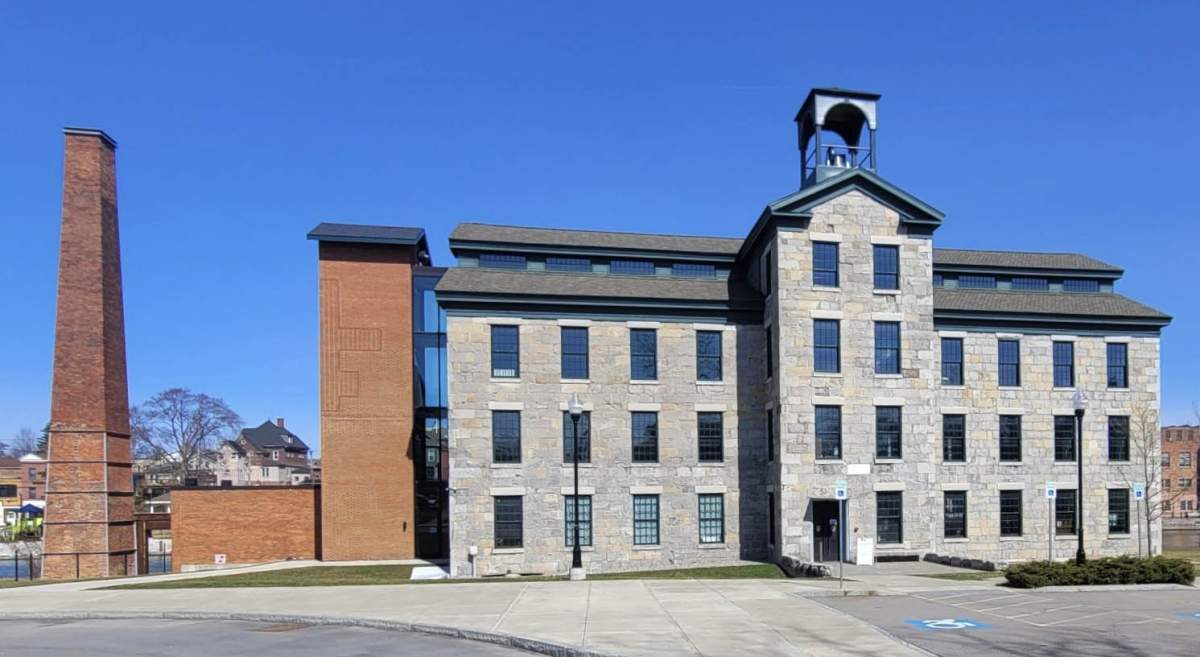
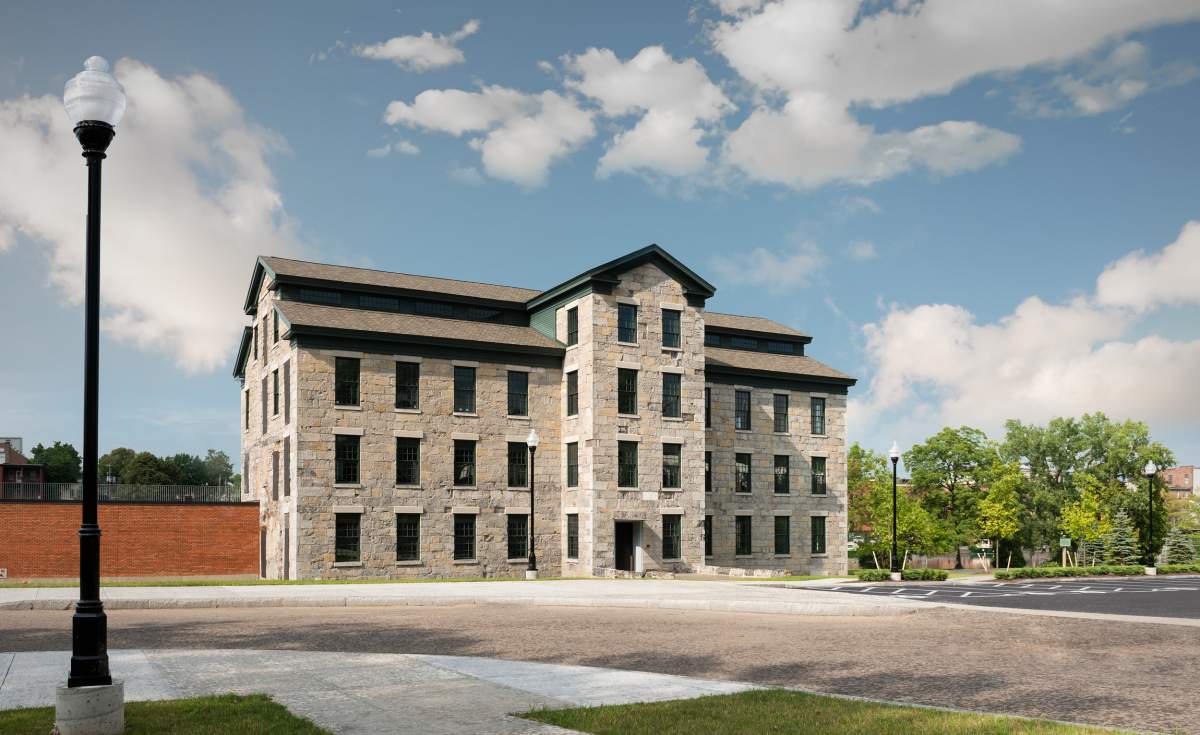
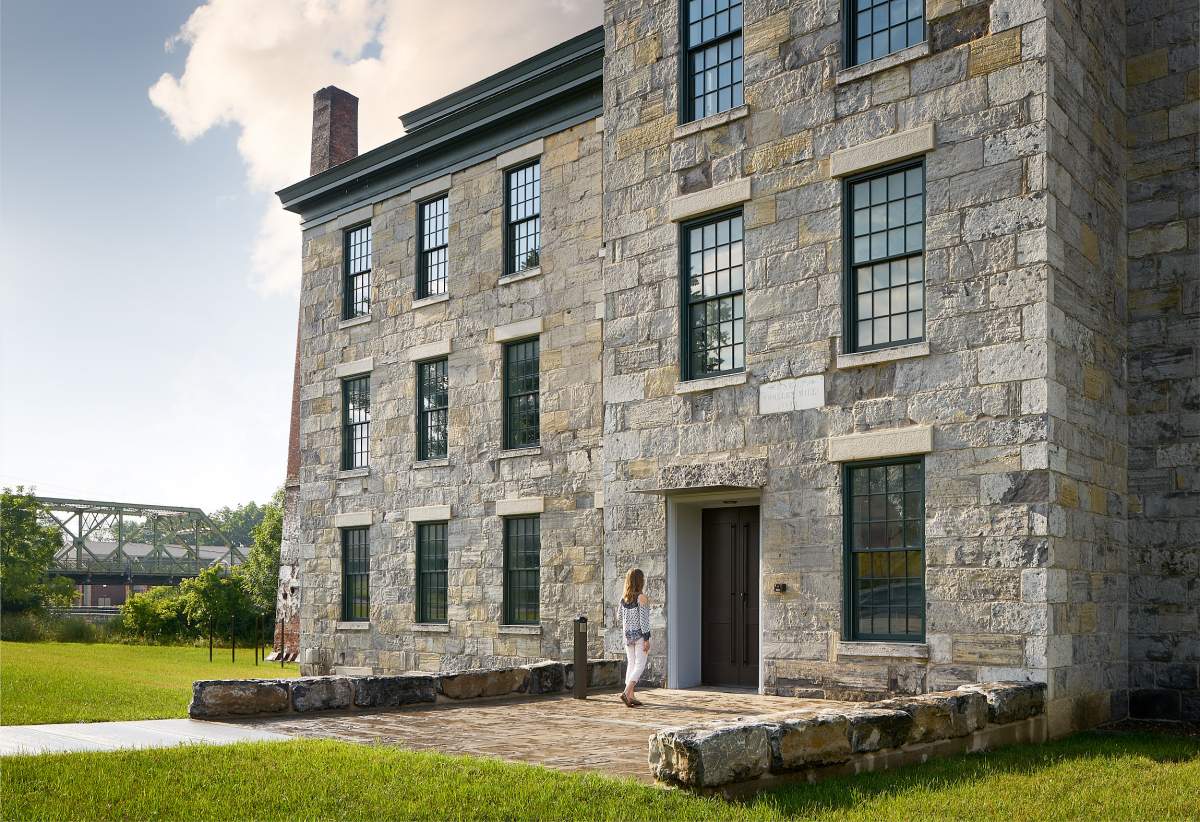
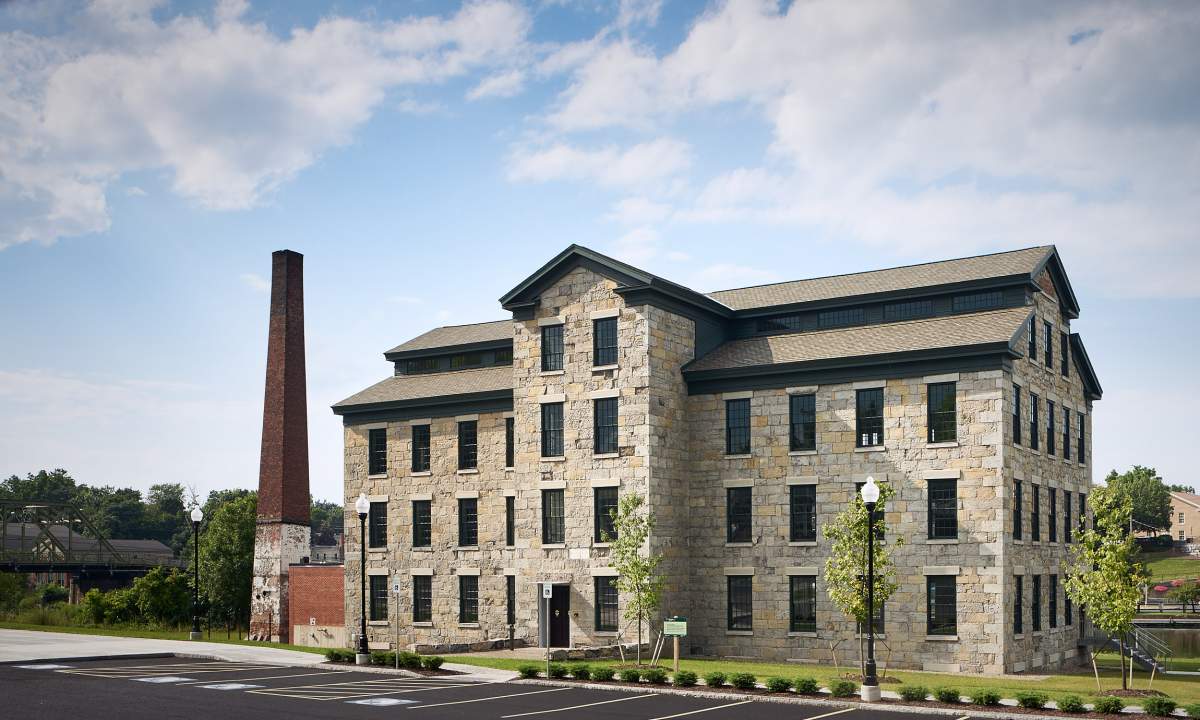
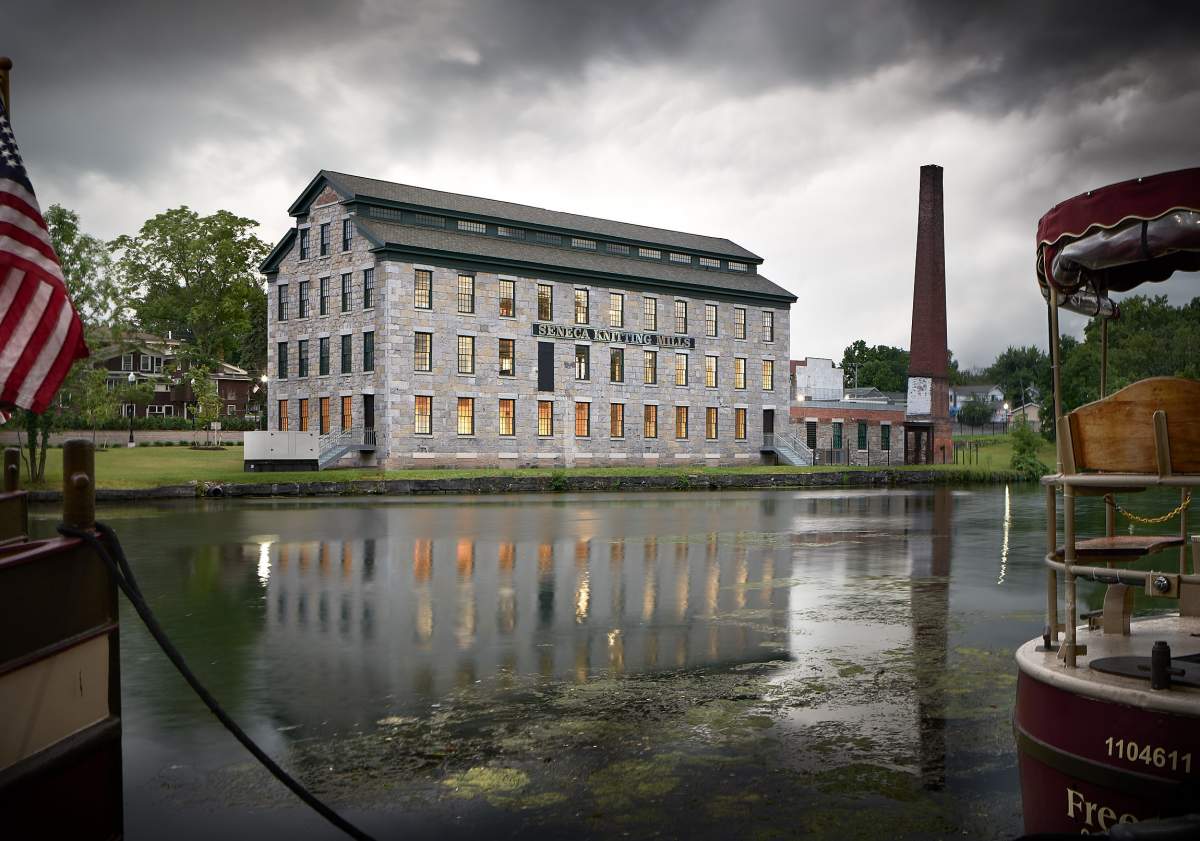
The National Women's Hall of Fame, the nation's first and oldest nonprofit organization and museum dedicated to honoring and celebrating the achievements of distinguished American women, is located at “the birthplace of women's rights”. With the signing of the Declaration of Sentiments in 1848, Seneca Falls became the internationally recognized home of women's rights. The three- and one-half story historic 1844 Seneca Knitting Mill, located on a branch of the Erie Canal system, has been adapted to become a permanent home for the National Women's Hall of Fame creating a state-of-the art facility and vibrant educational venue. The building originally housed an industry that contributed to the development and history of the Village of Seneca Falls. The Hall purchased the building in January of 2007 and began a master planning effort for the building's preservation and rehabilitation and adaptive reuse. The long-vacant building required significant stabilization efforts to reestablish it as a sound structure.
The restored historic mill now invites national and international visitors, scholars, tourists, and the community to discover, and be inspired by, the rich heritage centered around the stories of great American women throughout history. The rehabilitation offers visitors an opportunity to explore the building's complex past and its future in an exciting way—through the museum's use of the varied narratives of the mill's workers which are highlighted to provide connective threads to the present and future Seneca Falls community.
The National Women's Hall of Fame's collection of artifacts includes delicate materials that require thought and care in their conservation, making it important to create a stable environment with temperature, humidity, light control, pest management, and security. Because Seneca Falls climate includes widely varied seasonal temperatures with significant precipitation, maintaining stable temperature and humidity levels in a 180-year-old building is a challenge. Censors and electronic systems including heat and air conditioning are designed to alleviate temperature and humidity issues while the thermal mass of the stone walls of the Mill building provide a good foundation for environmental control, with the new windows, with historically accurate profiles, preventing infiltration of air and moisture.
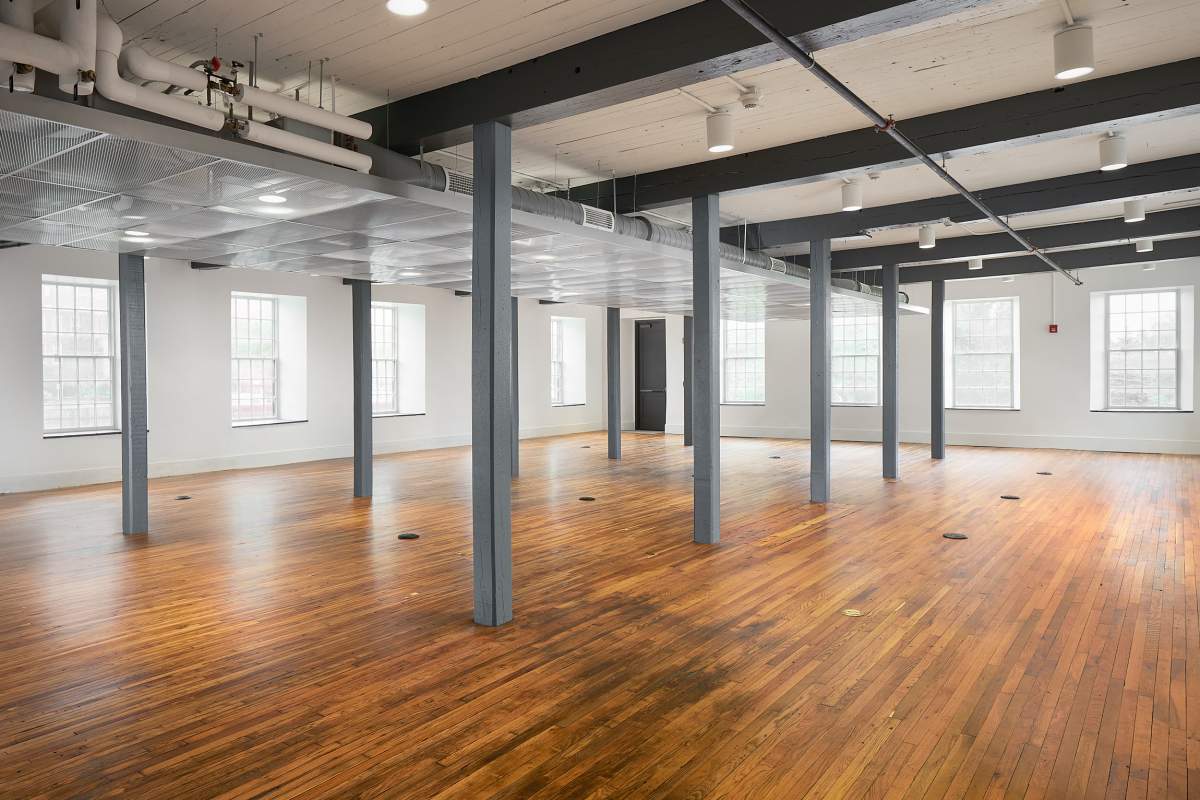
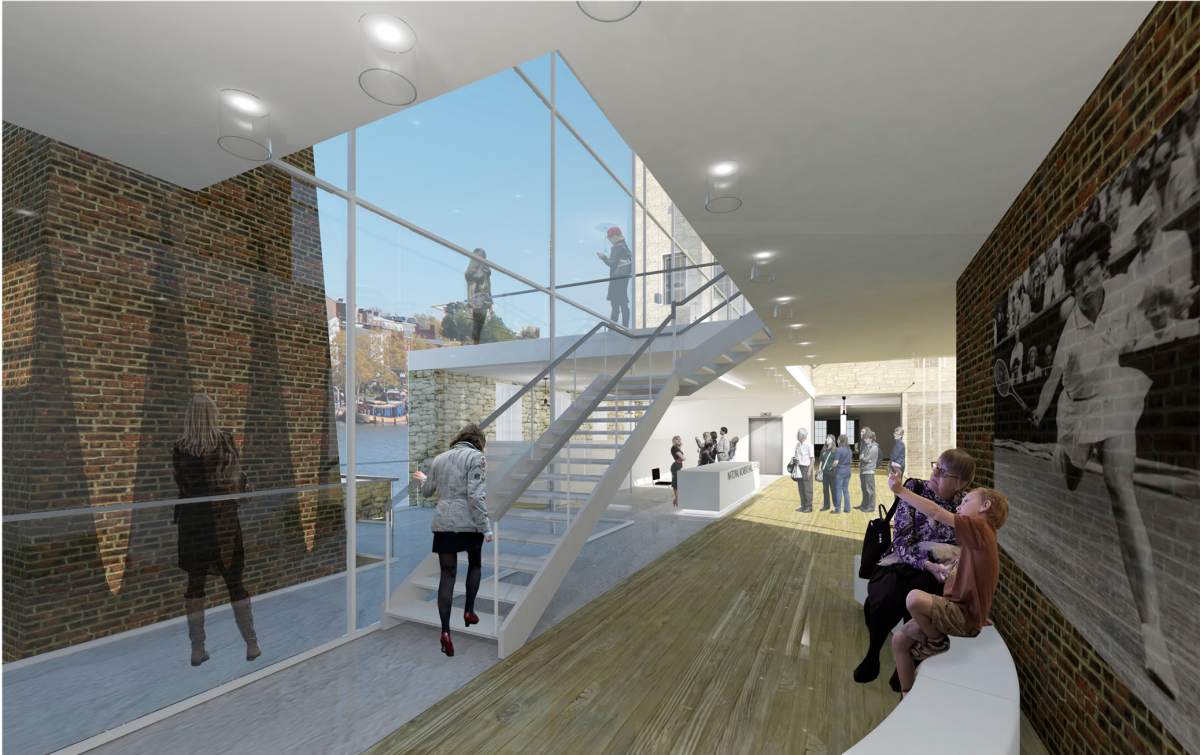
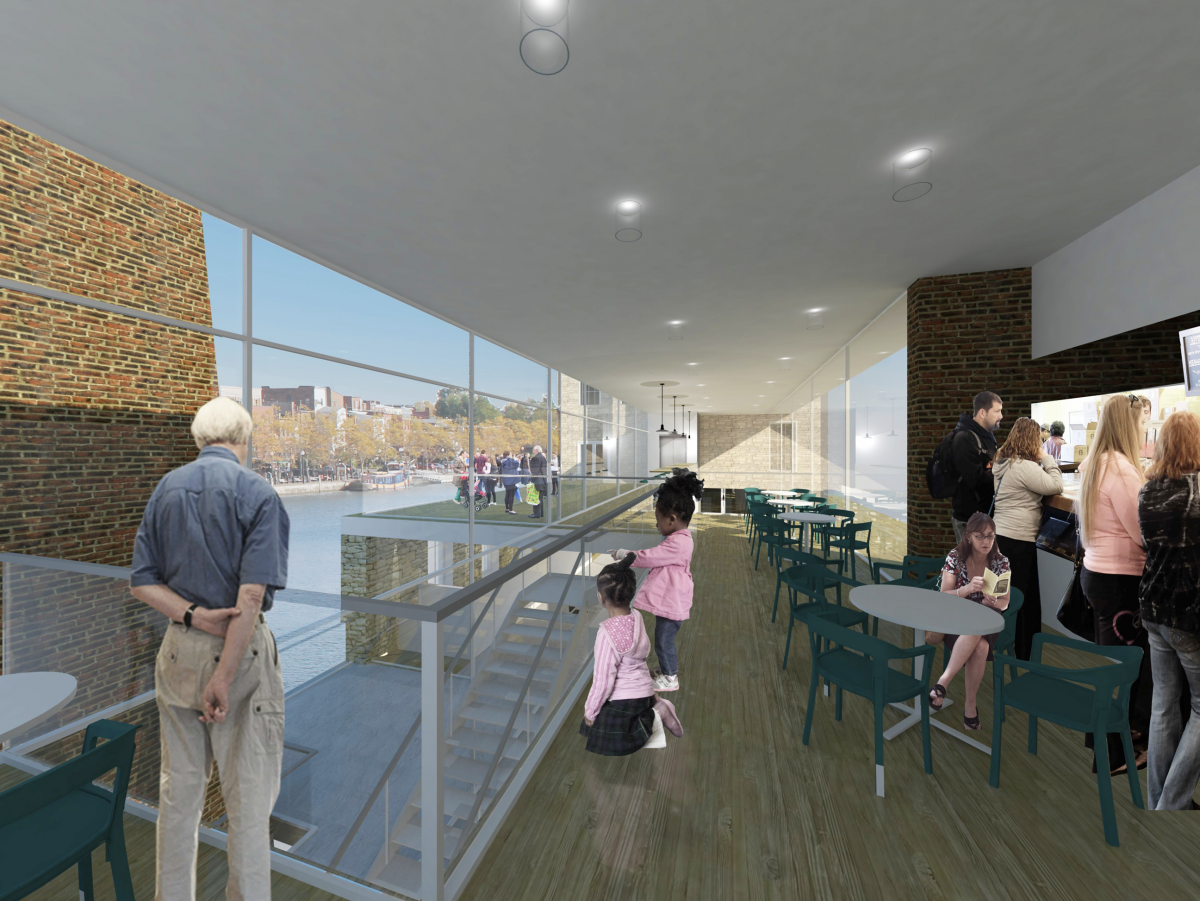
In August of 2020, The National Women's Hall of Fame opened its new home in the partially restored Mill. Additional project phases, the most recent completed in December of 2024 have further secured the longtime future and functionality of this historic building. An elevator serving all floors has been added and the second floor has now been refurbished to allow for additional exhibit gallery space that offers views of Seneca Falls and Erie Canal.
Phased projects have included site improvements, restoration of the Power House's limestone 1st floor and chimney stack stabilization and interior and exterior restoration of the stone Knitting Mill Building, roof and structural stabilization, window replacements, masonry repair and repointing, interior restoration, elevator installation, ADA accessibility upgrades, restrooms and emergency exit stairways. These restoration & reconstruction projects have been led by CJS Architects in conjunction with Structural and MEP consultants, The final piece of restoration to date was topping off the Mill with the reconstruction of the historical bell tower. Due to the severity of deterioration of the existing tower, a fiberglass bell tower replica was designed and built to recreate the original design. Local sponsorship from the surrounding community presented the hall with a modern bronze operable bell, with the original historical bell on display within the museum.
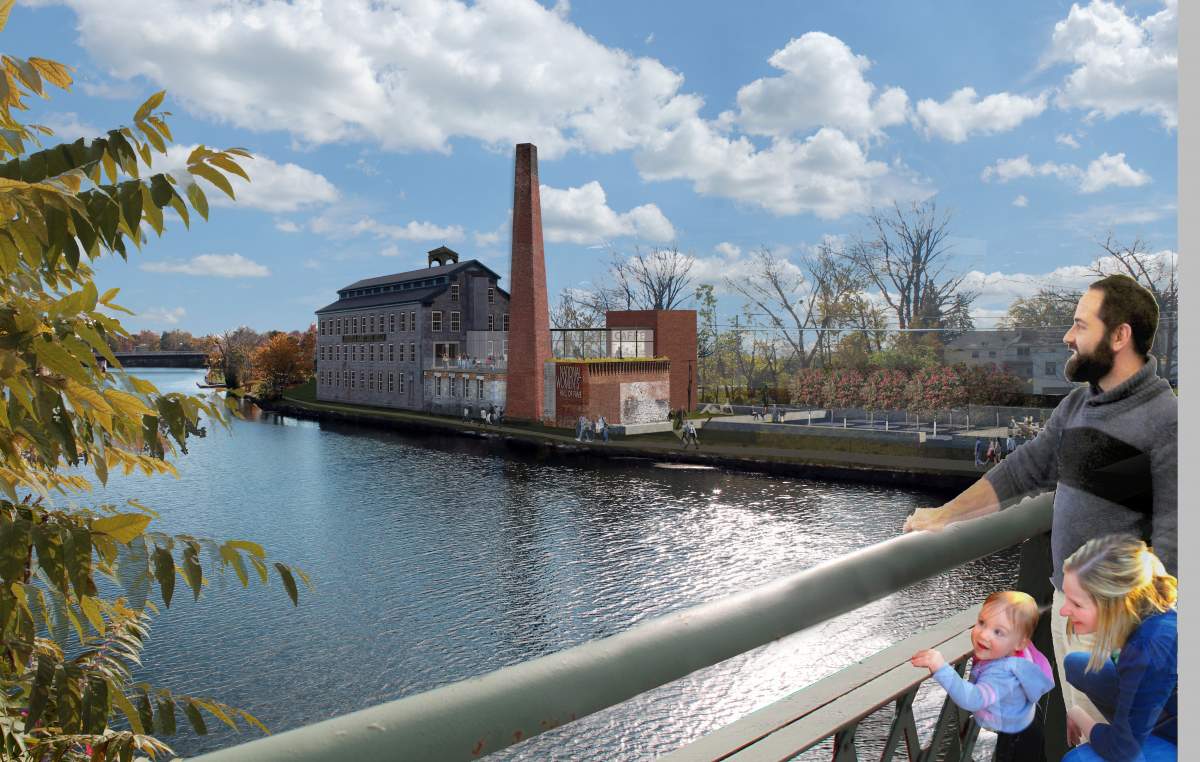
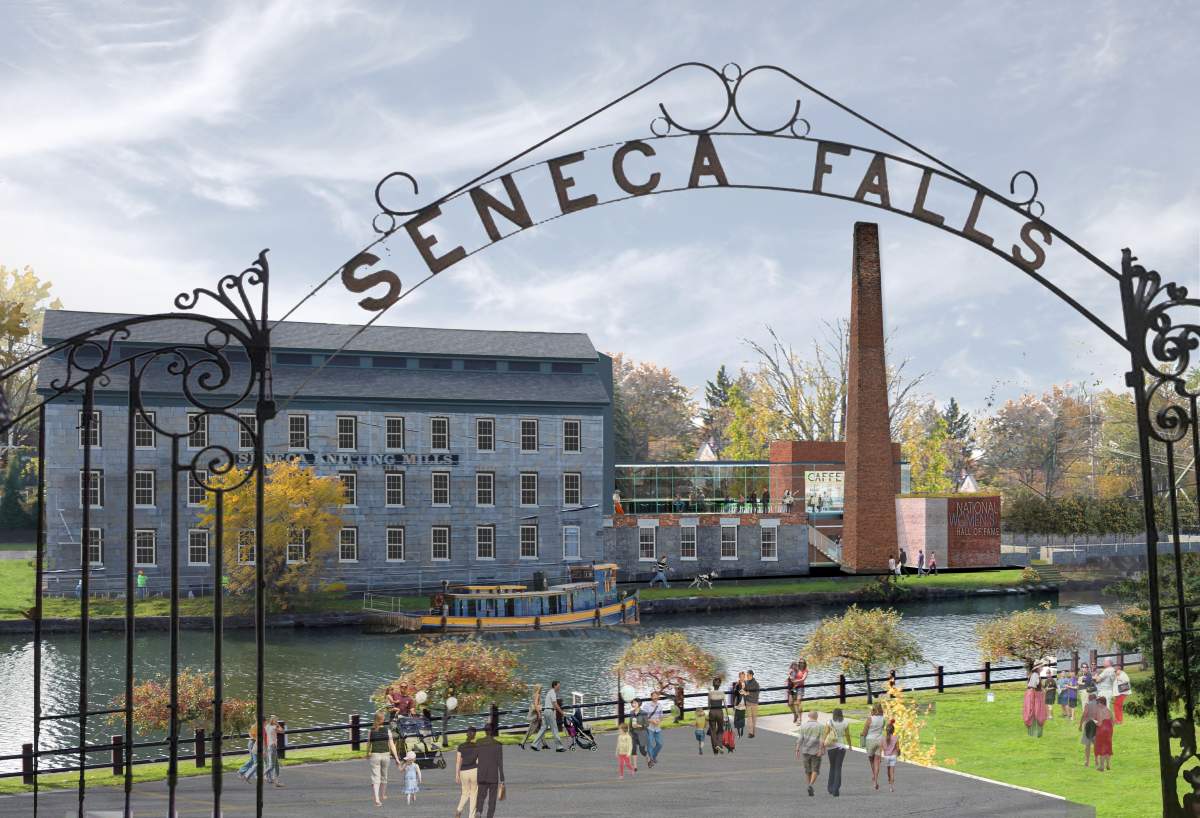
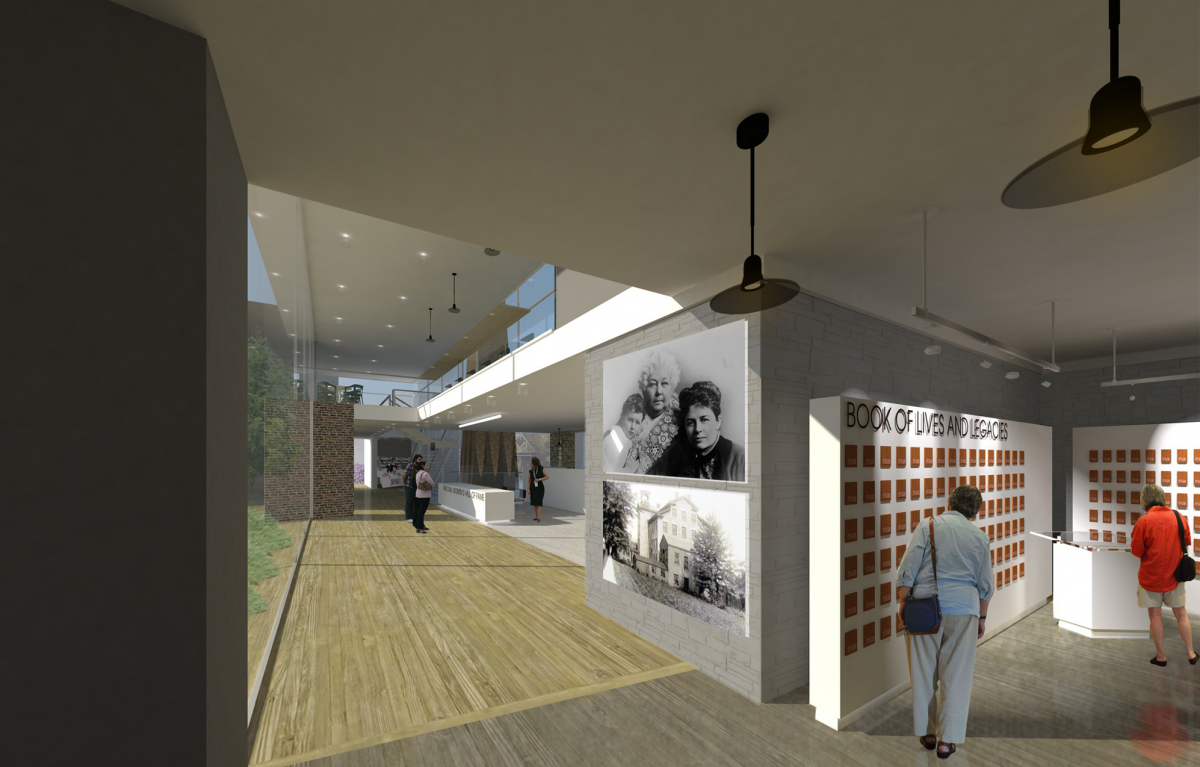
The overall masterplan, which is only partially executed to date, keeps the Mill as the central, iconic feature of the site. Both the completed and the future elements to be inserted onto the site, respect pre-existing building footprints, with an aesthetic of simple extruded forms in character with the orthogonal and regularly sited secondary buildings that once existed. At completion the masterplan includes programming of all four existing floors of the Mill building to host the museum's educational programs, inductee area, research center, Mill history, special exhibits and artifact displays. A future addition to the mill will serve as a Welcome Center and include a visual orientation area, reception, gift store and restrooms.
The NWHOF has been awarded multiple grants to assist in the Mills' rehabilitation including National Park Service Save America's Treasures, Rochester Area Community Foundation, New York State Environmental Protection Fund as administered by Office of Parks, Recreation & Historic Preservation, New York State Canal Corporation, and Restore NY.